
The AM387-0001 Nozzle Demystified: A Craftsman’s Guide to Precision Plasma Cutting
Let me tell you a story from my early days in the metal shop. I was running a CNC plasma table, and my cuts were consistently… bad. The edges were beveled, dross was a nightmare to clean off, and I was blowing through consumables like they were going out of style. I blamed the machine, the metal, even the air pressure. It wasn’t until a grizzled, old-school welder took a look at my setup and held up a tiny, copper-colored part. “Son,” he said, “you’re using the wrong nozzle.” That little part was an AM387-0001. I had no idea what the numbers meant, let alone the “radius no groove” part of its name.
That experience taught me a fundamental truth in metal fabrication: the biggest improvements often come from understanding the smallest components. The AM387-0001 nozzle is one of those critical, yet frequently misunderstood, components. If you’ve found yourself searching for this specific part number, you’re likely looking for a solution to a precision cutting problem. This article is the guide I wish I’d had. We’re going to peel back the layers on this unassuming piece of copper and uncover exactly why its specific design—”w/radius no groove 1.0mm”—is so important for achieving clean, consistent, and professional plasma cuts.
What Exactly is the AM387-0001 Nozzle?
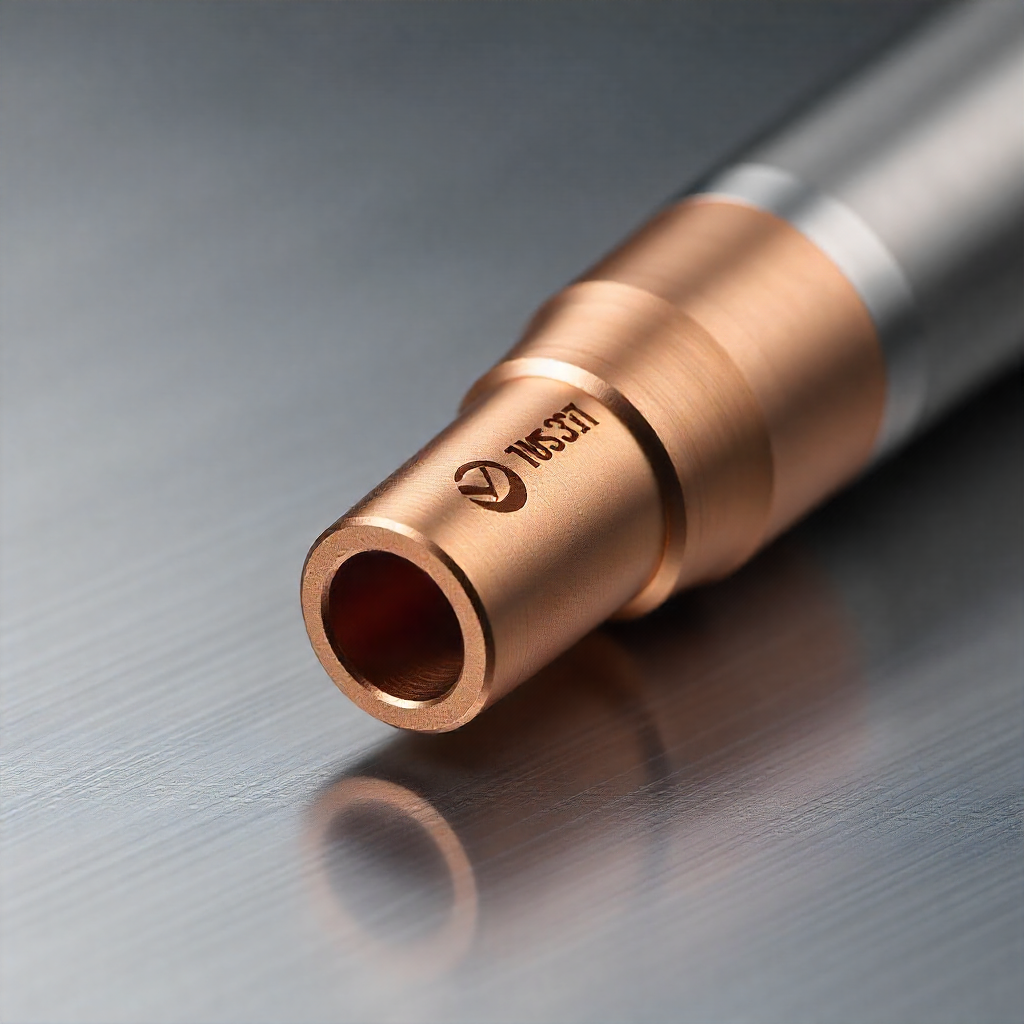
In the simplest terms, the AM387-0001 is a consumable component for a plasma cutting torch. Think of a plasma torch like a very powerful, very hot pencil. The electrode is the pencil lead, and the nozzle is the sharpened tip that focuses the graphite onto the paper. In plasma cutting, an electrical arc is superheated into a plasma state and forced through a small orifice in the nozzle. This focused, high-velocity jet of plasma is what slices through metal.
The “AM387” part is a model or series designation, typically associated with brands like Centricut, which is a leading manufacturer of aftermarket plasma consumables. The “-0001” is the specific variant within that series. When you see “Centricut/Original,” it signifies that this part is made to the original equipment manufacturer (OEM) specifications, ensuring it will work correctly and safely with your plasma cutting system. Using off-brand, non-spec parts can lead to poor performance and even damage your torch.
So, the AM387-0001 isn’t just a random piece of metal; it’s a precision-engineered tool designed to manage one of the most violent and energetic processes in metalworking. Its job is to constrict and focus a 20,000°F arc into a clean, manageable stream. How well it does that job depends entirely on the features we’re about to explore.
Decoding the Specs: Radius, No Groove, and 1.0mm Explained
The full description “nozzle am387-0001 w/radius no groove 1.0mm” might look like technical jargon, but it’s actually a precise blueprint of the part’s design. Let’s break down each element, because understanding these terms is the key to unlocking its potential.
Why the “Radius” Design Matters for Your Cut
The “radius” refers to the shape of the nozzle’s exit hole—the very tip where the plasma arc exits. Instead of a sharp, 90-degree corner at the outlet, a radiused nozzle has a gently curved, rounded transition.
I want you to imagine water flowing through a pipe. If the pipe has a sharp, square end, the water tends to “cling” to the edge and disrupt the flow as it exits. It becomes turbulent. Now, imagine that same pipe with a smooth, bell-shaped end. The water flows out in a much more coherent, straight, and focused stream.
The same principle applies to plasma. A radiused nozzle exit promotes a more stable, laminar (smooth) flow of the plasma gas. This results in several tangible benefits for you, the operator:
-
Reduced Arc Wander: A stable arc starts precisely where you tell it to and is less likely to wiggle or dance around, which is a common cause of an uneven, wavy cut edge.
-
Less Bevel: When the arc is focused and straight, it cuts vertically through the metal. A distorted arc, often from a non-radiused nozzle, hits the metal at an angle, creating that characteristic beveled edge where one side of the cut is not square to the surface.
-
Improved Cut Quality: A stable, focused arc simply produces a cleaner cut with smoother surfaces and less slag.
In my experience, switching to a radiused nozzle was the single biggest factor in eliminating the bevel on my thin-to-medium gauge mild steel cuts. It made the difference between a part that needed extensive grinding and one that was ready for welding straight off the table.
The “No Groove” Feature: Simplicity and Reliability
This is another feature that often causes confusion. Some plasma nozzles have one or two small grooves or channels machined into the face of the nozzle (the flat surface that faces the workpiece). These are often called “secondary gas” or “venting” grooves.
The AM387-0001 specifically does not have these. It is a “no groove” or “flat face” design. This is a feature of its intended application and plasma system technology.
-
Purpose of Grooves (in other nozzles): In some dual-gas or certain air plasma systems, these grooves allow a secondary flow of gas to help shield the cut, swirl the arc, or assist in blowing away molten material.
-
Advantages of “No Groove”: The primary advantage of a no-groove design is its simplicity and robustness. Without the grooves, the nozzle’s face is stronger and less prone to damage from accidental contact with the workpiece (a common occurrence called “pierce height crash”). The flat face also provides a very consistent and predictable plasma flow. In the systems designed for this nozzle, the gas dynamics and arc control are handled internally by other components, like the swirl ring, making external grooves unnecessary. It’s a more straightforward, less fussy design that just works reliably.
The 1.0mm Orifice: Balancing Speed and Precision
The “1.0mm” refers to the diameter of the tiny hole in the center of the nozzle—the orifice. This is the gateway for the plasma arc. The size of this orifice is absolutely critical and determines the characteristics of your cut.
-
Smaller Orifices (e.g., 0.8mm): Create a finer, more concentrated arc. This is excellent for very detailed work on thinner metals (under 1/4 inch). However, a smaller orifice can lack the power and energy density to efficiently cut through thicker materials.
-
Larger Orifices (e.g., 1.3mm): Allow more plasma and amperage to pass through, making them suitable for cutting thicker plate metal. The trade-off is that the arc is wider and less focused, resulting in a wider kerf (the width of the cut) and generally rougher finish on thinner materials.
The 1.0mm orifice sits in a very useful “sweet spot.” It provides an excellent balance between precision and power. It’s versatile enough to handle a wide range of materials from, say, 16-gauge sheet metal up to 1/2-inch plate with good quality, depending on your machine’s amperage. It gives you a clean, narrow kerf without sacrificing too much cutting speed. For many general fabrication shops, the 1.0mm nozzle is the go-to workhorse.
Where is the AM387-0001 Nozzle Used? A Look at Compatibility
You can’t just slap an AM387-0001 into any plasma torch and expect it to work. It is designed for specific plasma cutter models and torch types. This is where things can get tricky, and it’s vital to cross-reference with your machine’s manual or consumable guide.
Generally, the AM387-0001 is compatible with a range of systems that use a common consumable stack. You will often find it used in:
-
Thermal Dynamics machines (like the SAM series, Cutmaster series).
-
Victor (Thermacut) systems.
-
Esab portable plasma cutters.
-
CNC Plasma Tables that are equipped with compatible torches from manufacturers like Hypertherm (in certain older or specific torch models), Thermal Dynamics, and others.
The most common thread is that these systems are typically air plasma systems and often operate in a range of 40 to 80 amps for precision cutting. The AM387-0001 is a core part of the consumable set that usually includes a specific electrode (like a 3/16″ long hafnium insert style) and a swirl ring.
A word of caution from personal experience: I once assumed all “AM387” series nozzles were the same. I ordered a cheaper, non-spec AM387-0001 look-alike for my Thermal Dynamics torch. It fit, but the cut quality was terrible, and it wore out my electrode in just a few pierces. The internal geometries were subtly different, disrupting the gas flow. Always strive to use genuine Centricut or OEM parts. The few cents you save per nozzle will be spent tenfold in ruined parts, wasted time, and damaged electrodes.
How to Identify a Genuine Centricut/Original Nozzle
In a market flooded with counterfeits and sub-par imitations, knowing how to spot a genuine part is a valuable skill. Here’s what to look for:
-
Packaging: Genuine Centricut parts come in professional, branded packaging. The part number will be clearly labeled. Beware of parts that come in unmarked plastic bags or flimsy, poorly printed boxes.
-
Machining Quality: Look at the nozzle closely. A genuine part will have crisp, clean machining. The orifice should be perfectly round and concentric, with no burrs or rough edges. The radius should be smooth and even. Counterfeits often have rough machining, off-center orifices, and visible tool marks.
-
Material and Finish: Authentic nozzles are made from high-conductivity, high-quality copper (often tellurium copper) and have a consistent, clean finish. Fakes may use inferior copper alloys that look duller or have a different color tint.
-
Brand Markings: While not all genuine nozzles are laser-etched, many will have the manufacturer’s logo (e.g., Centricut) and the part number etched onto the side. The absence of markings isn’t always a red flag, but their presence is a good sign.
-
Supplier Reputation: Purchase from authorized distributors or well-respected welding supply stores with a physical presence and good online reviews. Be wary of deals on unknown marketplaces that seem too good to be true—they almost always are.
A Step-by-Step Guide to Inspecting and Replacing Your AM387-0001 Nozzle
Proper handling and installation are as important as the nozzle itself. A dirty or incorrectly installed nozzle will perform just as poorly as a fake one.
What You’ll Need: A clean workspace, clean gloves (to prevent skin oils from contaminating the parts), and the appropriate wrenches for your torch.
-
Power Down and Depressurize: Always, always disconnect power from your plasma cutter and purge the air pressure from the lines. Safety is non-negotiable.
-
Disassemble the Torch: Using your torch’s wrench, carefully unscrew the retaining cap (the outer shield). Remove it, then you should have access to the nozzle. Unscrew the nozzle. It should come out by hand or with a gentle turn of the wrench. Do not force it.
-
The Critical Inspection: Once the nozzle is out, this is your chance to diagnose problems.
-
Look at the Orifice: Hold it up to a light. Is the orifice still a perfect circle? Has it become oval-shaped or enlarged? This is a sure sign it’s worn out and needs replacement.
-
Check for Damage: Look for any nicks, dings, or melted spots on the face or inside the nozzle. Even a small dent on the radiused edge can disrupt the plasma flow.
-
Look for Spatter: Is there metal spatter stuck to the nozzle’s face or inside the orifice? This can deflect the arc and ruin cut quality. Sometimes, you can carefully clean spatter off with a wooden pick (never a metal tool that could scratch the copper!).
-
-
Clean the Seat: Before installing the new nozzle, take a moment to wipe out the inside of the torch where the nozzle seats. Any dirt or debris here can prevent a proper seal.
-
Install the New Nozzle: Carefully screw the new, genuine AM387-0001 nozzle into place. Hand-tighten it first, then use the wrench to snug it up. Do not overtighten. You are working with soft copper and precise threads. Overtightening can gall the threads or even crack the nozzle. A firm, gentle pressure is all that’s needed.
-
Reassemble: Replace the retaining cap and snug it down similarly. You’re now ready to test.
Troubleshooting Common Cut Quality Issues
Even with the right nozzle, things can go wrong. Here’s how the AM387-0001 relates to common problems:
-
Excessive Top Bevel: This is often a sign of an worn-out nozzle with an eroded orifice, or using a nozzle without a radius. The unstable, unfocused arc creates the bevel. A new, radiused AM387-0001 is the direct solution.
-
Heavy Low-Speed Dross (slag on the bottom of the cut): This is often a sign that your cut speed is too slow, or your pierce height/standoff is too high. While the nozzle affects arc focus, this is usually a machine parameter issue. Check your cut charts for speed and amperage.
-
Unstable Arc or “Arc Wander”: This can be caused by a damaged nozzle (especially a damaged radius), a worn electrode, incorrect air pressure, or a faulty swirl ring. Inspect your entire consumable set.
-
Poor Hole Quality: When piercing a hole, a worn or counterfeit nozzle can cause excessive blowback, resulting in a ragged, out-of-round hole. A genuine, sharp-orificed AM387-0001 will provide a much cleaner pierce.
Conclusion: Is the AM387-0001 the Right Nozzle for You?
The journey of understanding a simple nozzle like the AM387-0001 is a metaphor for mastering the craft of metal fabrication itself. Success lies in the details. This specific nozzle, with its radiused exit for stability, its no-groove design for robustness, and its 1.0mm orifice for versatility, is a brilliantly engineered solution for a specific set of plasma cutting challenges.
If you are operating a compatible air plasma system and your goal is to achieve clean, bevel-free cuts on mild steel from thin gauge up to about 1/2-inch, then the AM387-0001 is very likely the right tool for the job. It is the difference between fighting your equipment and working in harmony with it.
Investing in genuine, high-quality consumables like the Centricut AM387-0001 is never an expense; it’s an investment. It’s an investment in the quality of your work, the efficiency of your shop, and your own sanity. Stop blaming the machine, and start looking at the tip of the pencil. You might be surprised at the masterpiece you can create.
Frequently Asked Questions (FAQ)
Q1: Can I use an AM387-0001 nozzle on a Hypertherm Powermax 45?
A: Generally, no. The AM387-0001 is designed for Thermal Dynamics/Victor style torches. Hypertherm Powermax systems use a different consumable design (like the 45A nozzle). Using the wrong nozzle can damage your torch and void the warranty. Always check your machine’s manual for the correct part number.
Q2: My AM387-0001 nozzle wore out after only a few hours. Is this normal?
A: No, that is a very short lifespan. This could be caused by several factors: using a counterfeit/low-quality nozzle, incorrect air pressure (too low or contaminated with moisture/oil), piercing from too high a height causing “splashback,” or exceeding the recommended amperage for the nozzle.
Q3: What is the difference between the AM387-0001 and an AM387-0002 nozzle?
A: The primary difference is usually the orifice size. While the AM387-0001 has a 1.0mm orifice, the AM387-0002 typically has a larger orifice, such as 1.3mm, for cutting thicker materials at higher amperages. The “radius no groove” design is often shared across the series.
Q4: How often should I replace my plasma cutter nozzle?
A: There’s no fixed time. You should replace it based on inspection. If you see an out-of-round orifice, damage to the face or radius, or a drop in cut quality, it’s time for a new one. A careful operator might get 400-800 starts from a good nozzle, but this varies widely with usage.
Q5: Can I clean a dirty AM387-0001 nozzle?
A: Yes, carefully. Use a wooden toothpick or a specialized nozzle reamer to clear out spatter from the orifice. You can gently wipe the face with a soft cloth. Never use a metal drill bit or wire, as this will scratch and permanently damage the precise orifice and radius.
